Homemade Chicken Noodle Soup From Scratch
Pure comfort in every spoonful. This recipe blends a rich broth with tender chicken and soft egg noodles. Perfect for those days when you just need something gentle.
- Elena Brooks
- Comfort Food Classics
- September 1, 2026
- 4 min read
- Updated November 20, 2026
- Total time
- 1 h 5 min
- Servings
- 6 Servings
- Difficulty:
- Easy

Table of contents
Well, look, there is just something about the sound of a pot simmering on the stove that makes a house feel like a home. I remember when I was little, the scent of sautéed onion, carrots, and celery would drift through the hallway, and I knew right then that everything was going to be okay. It's a quiet kind of magic, honestly.
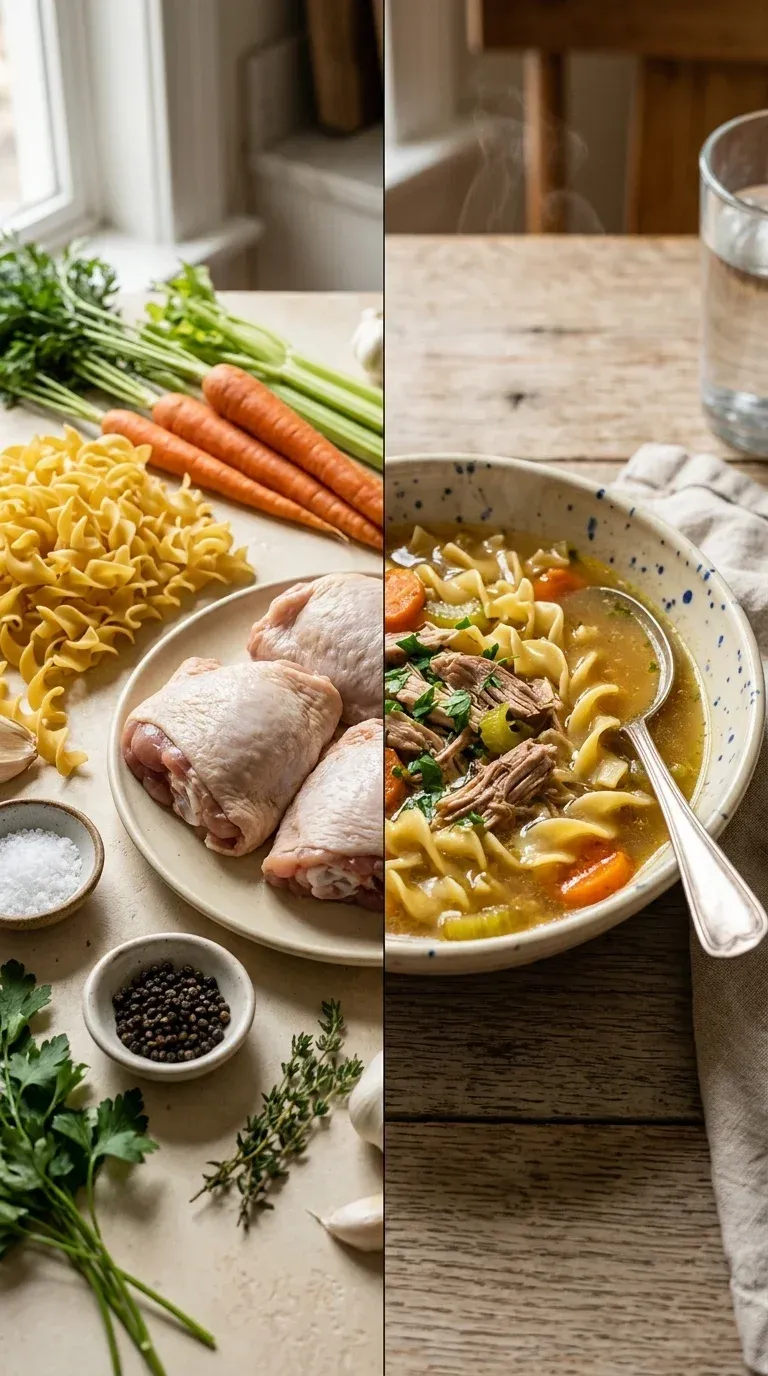
So, I wanted to share my way of making homemade chicken noodle soup. I use bone-in, skin-on chicken thighs because they stay so juicy, and a pinch of dried thyme and dried parsley for that earthy, nostalgic aroma. It's not fancy, and that's exactly why it works.
Yeah, the real secret is just taking your time with it. Let the low-sodium chicken broth bubble softly and let those egg noodles cook just until they're tender. It's a slow pace in a fast world, and I think we all need that sometimes.
The story behind it
Homemade chicken noodle soup has long been regarded as a universal remedy, crossing borders and generations as the quintessential 'healing' food. While its exact origin is debated, many point to the ancient Greeks or the early kitchens of Europe, where chicken broth was prized for its nutritional density and ability to soothe a weary body.
Throughout the centuries, the dish evolved into a cultural staple, especially in American households during the early 20th century. The addition of egg noodles provided a hearty texture that made the soup a full meal rather than just a starter. It became a symbol of maternal care and domestic stability, often passed down through handwritten notes in floral cookbooks.
Today, the act of simmering bone-in, skin-on chicken thighs with root vegetables remains a ritual of comfort. The alchemy of heat, salt, and time transforms simple pantry staples into a broth that feels deeply grounding. It is more than just a recipe; it is a piece of culinary history that continues to provide solace in every bowl.
Why You'll Love It
- Honestly, there is nothing like the smell of 1 large onion, 3 carrots, and 2 celery stalks softening in the pot to make a house feel like a home.
- I mean, using 1 pound bone-in, skin-on chicken thighs just makes the broth feel so much richer and more soulful than using breasts.
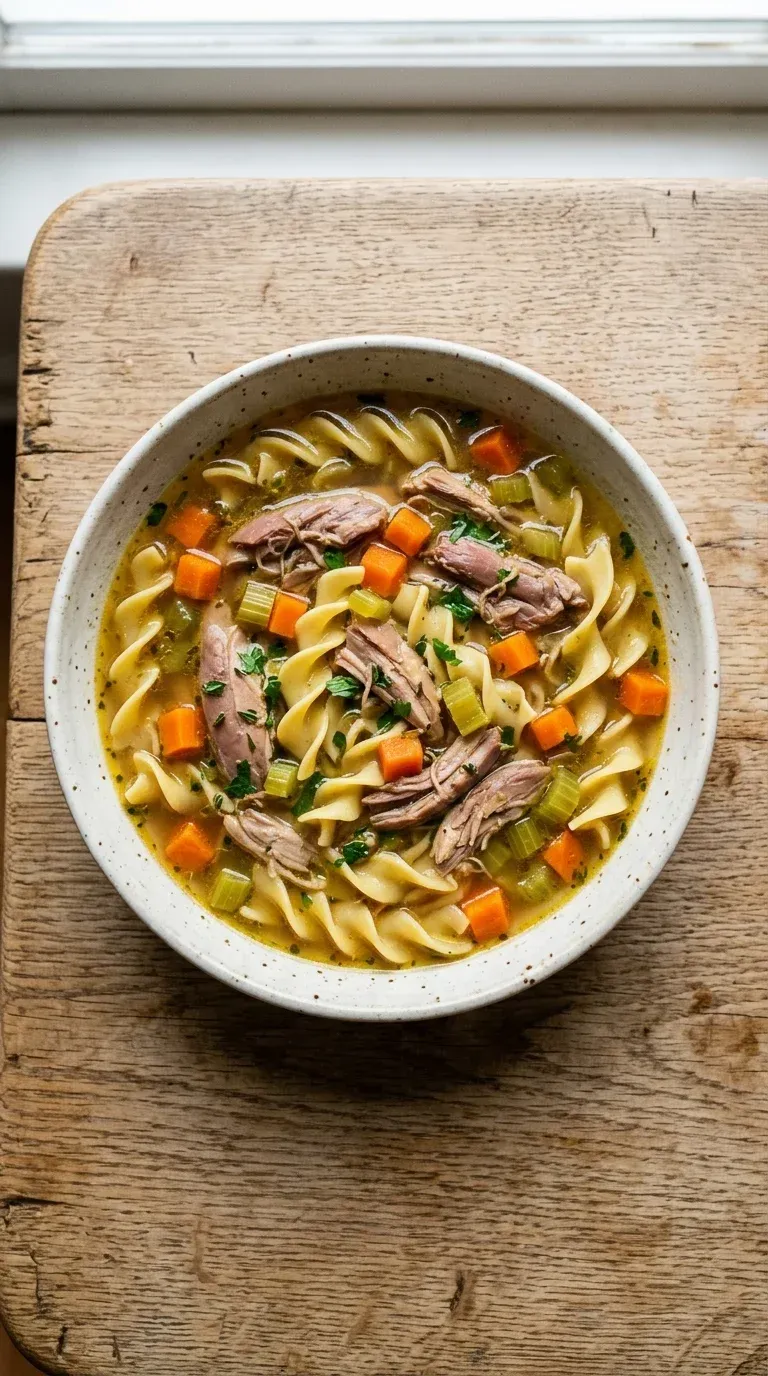
- It is just so comforting how the 2 cups egg noodles soak up all that goodness, giving you that warm, hug-in-a-bowl feeling we all need.
- Well, look, adding a few drops of lemon juice at the end is my little secret; it just wakes everything up and makes the whole pot sing.
Tips for success
- Noodle Timing, cook the noodles last to prevent them from becoming mushy.
- Broth Choice, use a pre‑made or homemade bone broth for a richer, more complex flavor profile.
- Acidity, a splash of fresh lemon juice at the very end lifts the brightness of the soup.
Professional secrets
- The 'Brightening' Technique: Using citrus at the end cuts through the fat of the chicken thighs.
- Texture Control: Removing the protein before boiling noodles ensures the chicken stays tender and noodles stay firm.
- Layering Aromatics: Sautéing the mirepoix (onion, carrots, celery) before adding liquid builds a foundation of flavor.
Common mistakes to avoid
- Overcooking the noodles, which makes them mushy and thickens the soup too much.
- Boiling the chicken too hard, which can make the meat tough.
- Forgetting to remove the bay leaf before serving—nobody likes biting into that!
Substitutions
- egg noodles: rotini or bowtie pasta. Adjust cook time based on the pasta type.
- chicken thighs: chicken breast. Reduce simmer time to avoid drying out the meat.
- olive oil: unsalted butter. Adds a richer, creamier taste to the sautéed vegetables.
Variations
- Chicken & Wild Rice Noodle Soup: Swap egg noodles for wild rice for a heartier, gluten‑free version that offers a chewy texture and nutty flavor while keeping the comforting broth intact.
- Vegan Comfort Chicken Noodle Soup: Replace chicken with firm tofu or tempeh, use vegetable broth, and optionally add diced mushrooms for depth. Omit the egg noodles and use gluten‑free pasta or kale for a plant‑based twist.

Storage
Cool completely and store in a sealed container in the fridge. For the freezer, use a freezer-safe bag for up to 3 months.
Make ahead
You can prepare the broth and chicken ahead of time. Just wait to add the noodles until you're ready to serve so they don't soak up all the liquid.
Leftovers
Store in the fridge for a few days. Reheat gently on the stove, adding a splash of water or broth if the noodles have absorbed too much liquid.
Serving ideas
- Serve with warm, crusty French bread or a garlic baguette
- Finish with a sprinkle of grated Parmesan for added richness
- Add a swirl of light cream for a more decadent feel
- Add a dash of hot sauce for those who like a little kick
Allergy information
Contains gluten (egg noodles). Ensure broth is chicken-based; avoid if allergic to poultry.
Homemade Chicken Noodle Soup From Scratch
Pure comfort in every spoonful. This recipe blends a rich broth with tender chicken and soft egg noodles. Perfect for those days when you just need something gentle.
- Prep time
- 20 min
- Cook time
- 45 min
- Total time
- 1 h 5 min
- Difficulty
- Easy
- Cuisine
- American
Ingredients
The Base
The Broth and Seasoning
The Hearty Bits
For Finishing
Instructions
- 1
Start by warming up the 1 tablespoon olive oil in your large stockpot over medium heat. Toss in the diced onion, sliced carrots, and celery. Just let them sauté and soften for about 5 minutes—it smells like home already, doesn't it?
- 2
Now, stir in those 4 cloves garlic, minced, along with the 1 teaspoon dried thyme, 1 teaspoon dried parsley, and 1 bay leaf. Cook them for just a minute until the kitchen smells wonderful, then pour in the 6 cups low‑sodium chicken broth and 1 cup water. Bring it all to a gentle simmer.
- 3
Carefully place the 1 pound bone‑in, skin‑on chicken thighs, cut into chunks into the pot. Season with salt and pepper to taste, let it come back to a simmer, then turn the heat down to low. Cover the pot and let it gently simmer for about 20 minutes until the chicken is tender and cooked through.
- 4
Using a slotted spoon, gently lift the chicken pieces out and set them aside in a bowl to keep warm. Oh, and don't forget to fish out and discard the bay leaf.
- 5
Turn the heat back up to medium and stir in the 2 cups egg noodles (about 200 g). Let them cook, uncovered, for 6–8 minutes. You want them al dente—just a little bit of a bite. Go ahead and adjust the salt and pepper now if you feel it needs it.
- 6
Slide those tender chicken pieces back into the pot. Stir gently so you don't break the noodles, and heat everything through for another 2 minutes. Taste it one last time; honestly, this is where you make it yours.
- 7
If you have lemon wedges (optional), squeeze a few drops of fresh lemon juice into the soup. It really brightens everything up. Now, take it off the heat.
- 8
Ladle the hot soup into bowls and garnish each one with some fresh parsley, chopped (for garnish) and another squeeze of lemon if you like. I always suggest some warm crusty bread on the side for dipping.
Nutrition per serving
- 350 kcal
- Calories
- 20 g
- Protein
- 45 g
- Carbs
- 12 g
- Fat
Tips & notes
- Bone-in chicken thighs give the broth a much deeper flavor than breasts. - Cooking the noodles separately from the chicken prevents them from overcooking. - Fresh lemon juice is a simple trick to balance the savory richness of the broth.
Frequently asked questions
Can I make this soup ahead of time?
You sure can, but I'd suggest cooking the noodles separately. That way they don't get too soft while the soup sits in the fridge.
What if I don't have chicken thighs?
You can use breasts, but they can get a bit dry. If you do, just simmer them for a shorter time so they stay tender.
My soup is a bit bland, what should I do?
Oh, that happens! Just add a pinch more salt and pepper, or a little extra squeeze of lemon—it usually does the trick.