Crispy Chicken Katsu with Tonkatsu Sauce
Golden-brown chicken breasts coated in panko for the ultimate crunch. Served with a homemade, savory-sweet sauce. A simple way to bring a bit of Japanese comfort to your kitchen.
- Elena Brooks
- Comfort Food Classics
- September 4, 2026
- 3 min read
- Updated November 20, 2026
- Total time
- 35 min
- Servings
- 4 Servings
- Difficulty:
- Easy
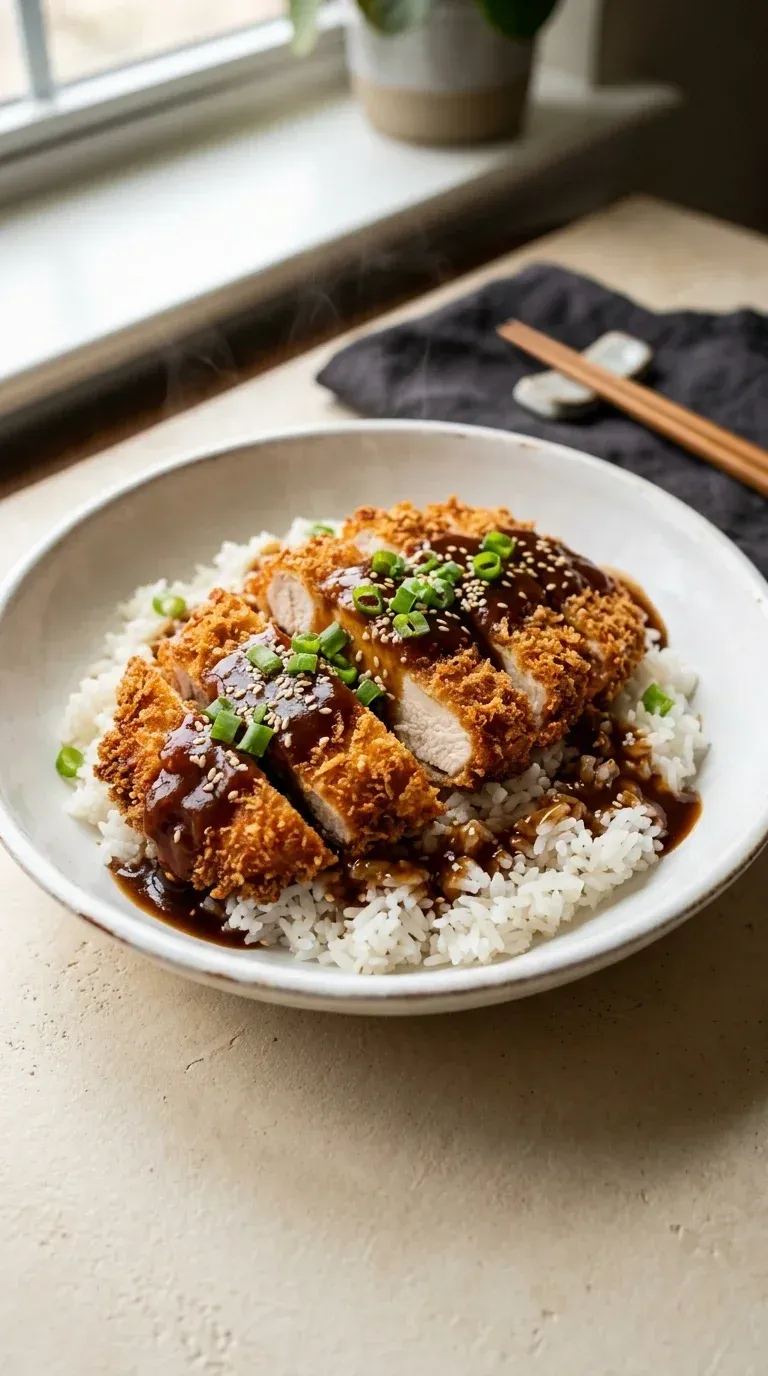
Table of contents
Well, look, I've always found that the simplest meals are the ones that stick with you. I remember when I first tried making this; I was so worried about the oil, but once I heard that first sizzle of the panko breadcrumbs, I just knew it was going to be alright. It's just... there's this wonderful, warm scent that fills the kitchen, you know?
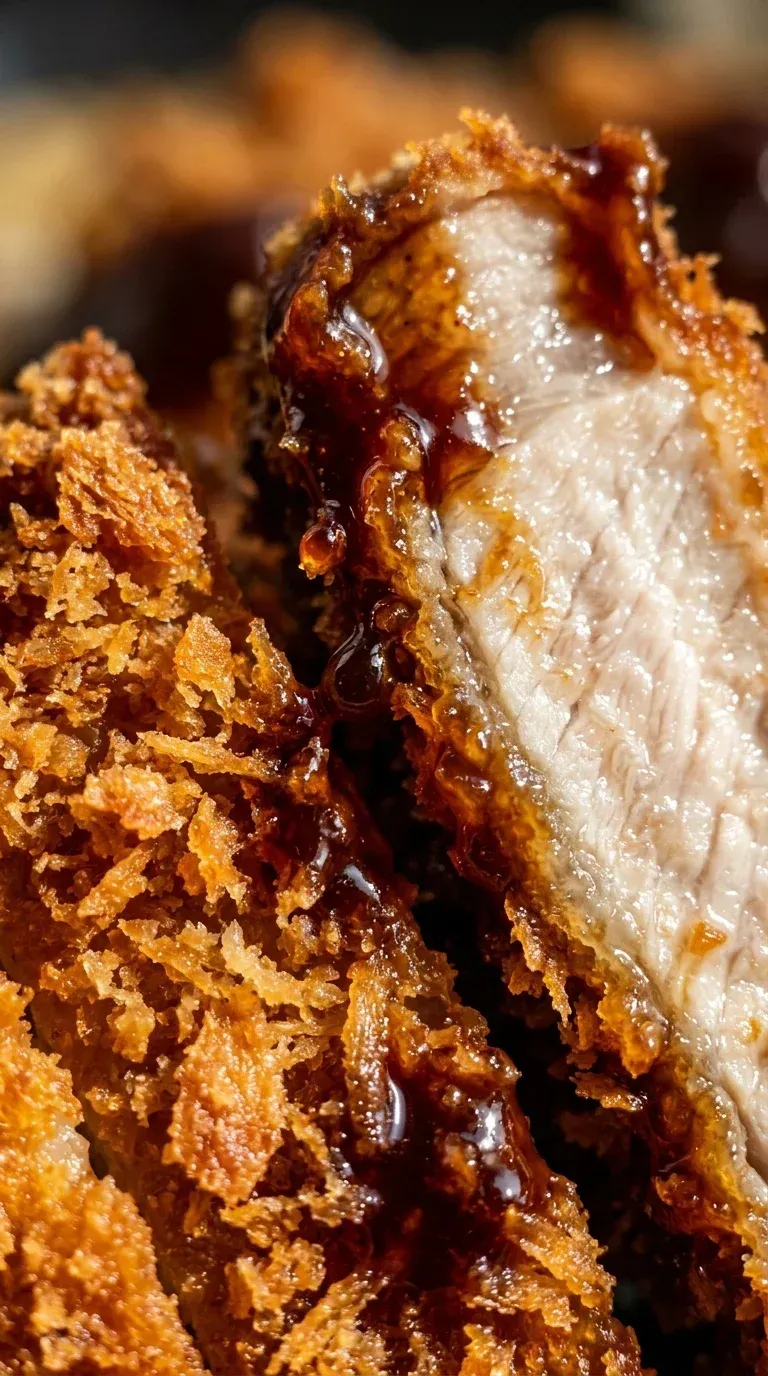
Honestly, the best part is that first bite of the crispy chicken katsu with tonkatsu sauce. That sharp, satisfying crackle followed by the tender chicken inside... wow. It's just grounding. I usually serve mine over a big mound of steamed Japanese short-grain rice, and I mean, it really is the ultimate comfort food after a long day.
So, yeah, don't be intimidated by the breading station. It's actually kind of meditative, just dipping and coating. Oops, I might get a little flour on the counter, but that's just part of the joy of cooking, right?
The story behind it
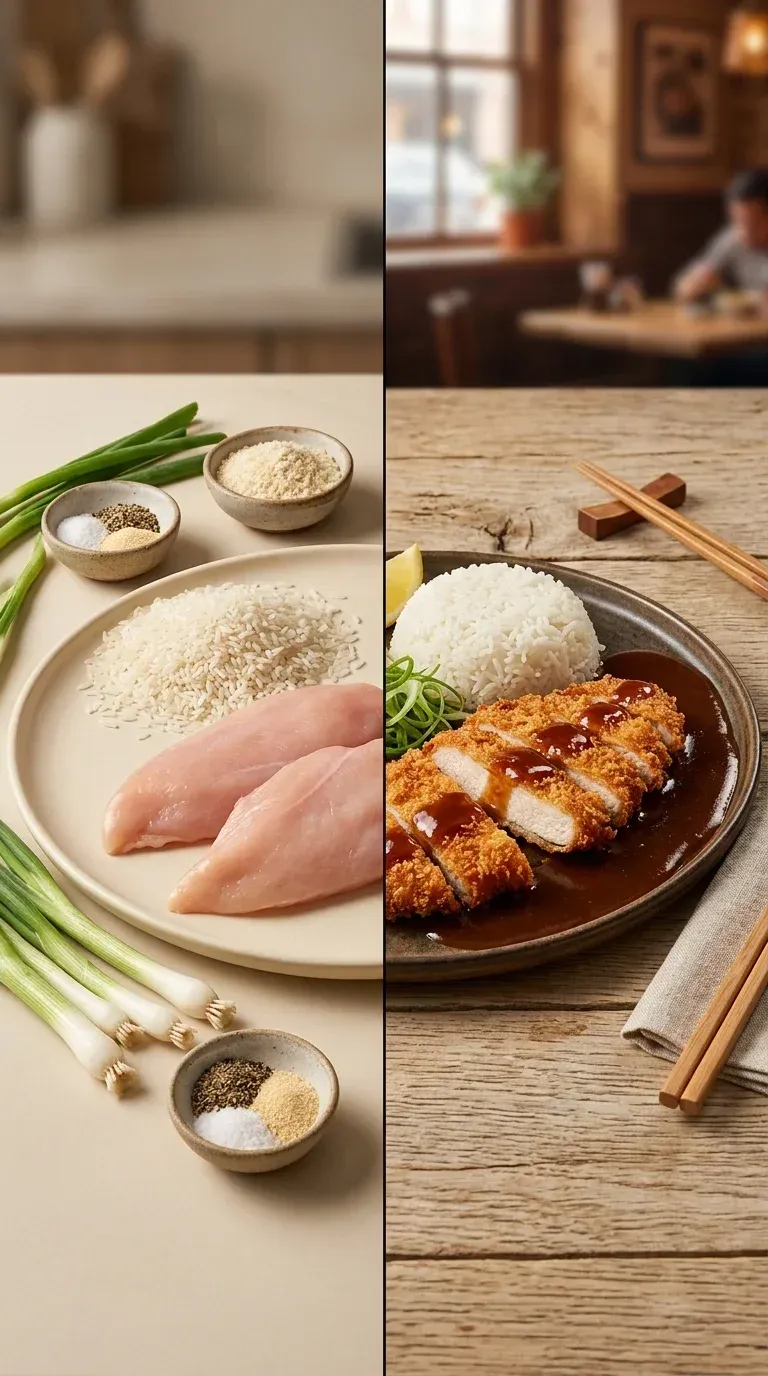
The story of katsu is a fascinating reflection of cultural exchange, emerging from the Japanese adaptation of European breaded cutlets. While the concept of the schnitzel traveled from Europe to Japan, the Japanese refined it into something entirely their own by introducing panko—larger, airier breadcrumbs that create a lighter, crispier texture than traditional crumbs.
Over time, crispy chicken katsu with tonkatsu sauce became a staple of 'Yoshoku', which refers to Western-influenced Japanese cuisine. The accompanying tonkatsu sauce is a masterclass in balance, blending the sweetness of fruit and sugar with the salty depth of soy sauce and the tang of vinegar, creating a complex profile that cuts through the richness of the fried meat.
Today, this dish is beloved across all generations in Japan, from school lunch boxes to high-end eateries. It represents a bridge between East and West, turning a simple piece of chicken into a celebrated comfort food classic that values texture and harmony above all else.
Why You'll Love It
- Honestly, that first bite of the golden panko breadcrumbs is just pure magic, so crisp and satisfying.
- It's a real hug in a bowl, especially when those tender boneless, skin-less chicken breasts soak up all that tangy sauce.
- Well, look, it's surprisingly easy to put together, making it a go-to for those nights when you just need something comforting.
- I mean, the way the rich tonkatsu sauce cuts through the fried goodness... wow, it just feels like a special treat.
Tips for success
- Panko Pressure, Press the panko onto the chicken firmly so the crumbs don't fall off in the oil.
- Pan Choice, Use a deep skillet to keep the oil level low and avoid a greasy result.
- Rice Flavor, Try steaming your rice with a splash of mirin for a more authentic taste.
Professional secrets
- The 'Sizzle Test' ensures oil is at exactly 350°F without needing a thermometer.
- Double-layering the sauce with both powdered and fresh aromatics creates depth.
- Halving the breasts lengthwise ensures a uniform thickness for a perfect fry.
Common mistakes to avoid
- Not shaking off excess flour, which can cause the breading to peel off.
- Overcrowding the pan, which lowers the oil temperature and makes chicken greasy.
- Frying too quickly on high heat, leaving the center raw while the outside burns.
Substitutions
- Panko breadcrumbs: Regular breadcrumbs. It won't be as airy or crunchy, but it still works in a pinch.
- Vegetable oil: Canola oil. Any neutral oil with a high smoke point will do just fine.
Variations
- Buttermilk Marinated Chicken Katsu: For something extra juicy, marinate the chicken in buttermilk and a splash of hot sauce before you start the breading process. It adds a lovely peppery kick.
- Beef Katsu Kyoto Style: Swap the chicken for tender beef tenderloin slices. Use the same panko and sauce for a rich, Kyoto-inspired variation.
Storage
Keep leftovers uncovered on a plate for up to 2 hours to maintain crispness, then cover loosely.
Make ahead
You can bread the chicken in advance and store it in the fridge, but for the best crunch, fry them just before serving.
Leftovers
Store in an airtight container. To keep them from getting soggy, reheat in a skillet over medium heat until hot through.
Serving ideas
- Serve over a generous mound of steamed Japanese short-grain rice.
- Drizzle the tonkatsu sauce in a zig-zag pattern for a cafe look.
- Pair with a side of finely shredded raw cabbage for authentic texture.
- Add a fresh lemon wedge on the side to brighten the fried flavors.
Allergy information
Contains wheat (flour, panko), eggs, and soy. Check Worcestershire sauce for fish/anchovy allergens.
Crispy Chicken Katsu with Tonkatsu Sauce
Golden-brown chicken breasts coated in panko for the ultimate crunch. Served with a homemade, savory-sweet sauce. A simple way to bring a bit of Japanese comfort to your kitchen.
- Prep time
- 15 min
- Cook time
- 20 min
- Total time
- 35 min
- Difficulty
- Easy
- Cuisine
- Japanese
Ingredients
Chicken Breading
Tonkatsu Sauce
Instructions
- 1
First, we need to get the chicken just right. Lay your chicken breasts between two sheets of plastic wrap and gently flatten them to about ¼-inch thickness using a meat mallet or a rolling pin. Honestly, it just helps everything cook evenly.
- 2
Go ahead and season both sides of those cutlets with 1 teaspoon salt and ½ teaspoon freshly ground black pepper. Simple, but so important.
- 3
Now, let's set up our breading station. Use three shallow dishes: flour in dish A, those lightly beaten eggs in dish B, and panko breadcrumbs in dish C. Dredge each piece in flour—shake off the extra, please—dip it in the egg, and then coat it thoroughly in panko.
- 4
Heat your vegetable oil in a skillet over medium-high heat until it hits about 350°F. I always test it by dropping a pinch of panko; if it sizzles immediately, you're good to go.
- 5
Fry the chicken for about 3–4 minutes per side. You're looking for a deep golden brown color and an internal temperature of 165°F. Once they're done, move them to a plate lined with paper towels to drain.
- 6
While the chicken rests, let's make the sauce. In a small bowl, whisk together your ketchup, Worcestershire sauce, soy sauce, rice vinegar, sugar, garlic powder, and ginger powder until it's all smooth and the sugar has dissolved.
- 7
Stir in that minced fresh garlic and fresh ginger. It adds such a lovely little brightness to the sauce, yeah.
- 8
Carefully slice your fried chicken into bite-sized strips or pieces. Just be gentle so you don't lose that crust.
- 9
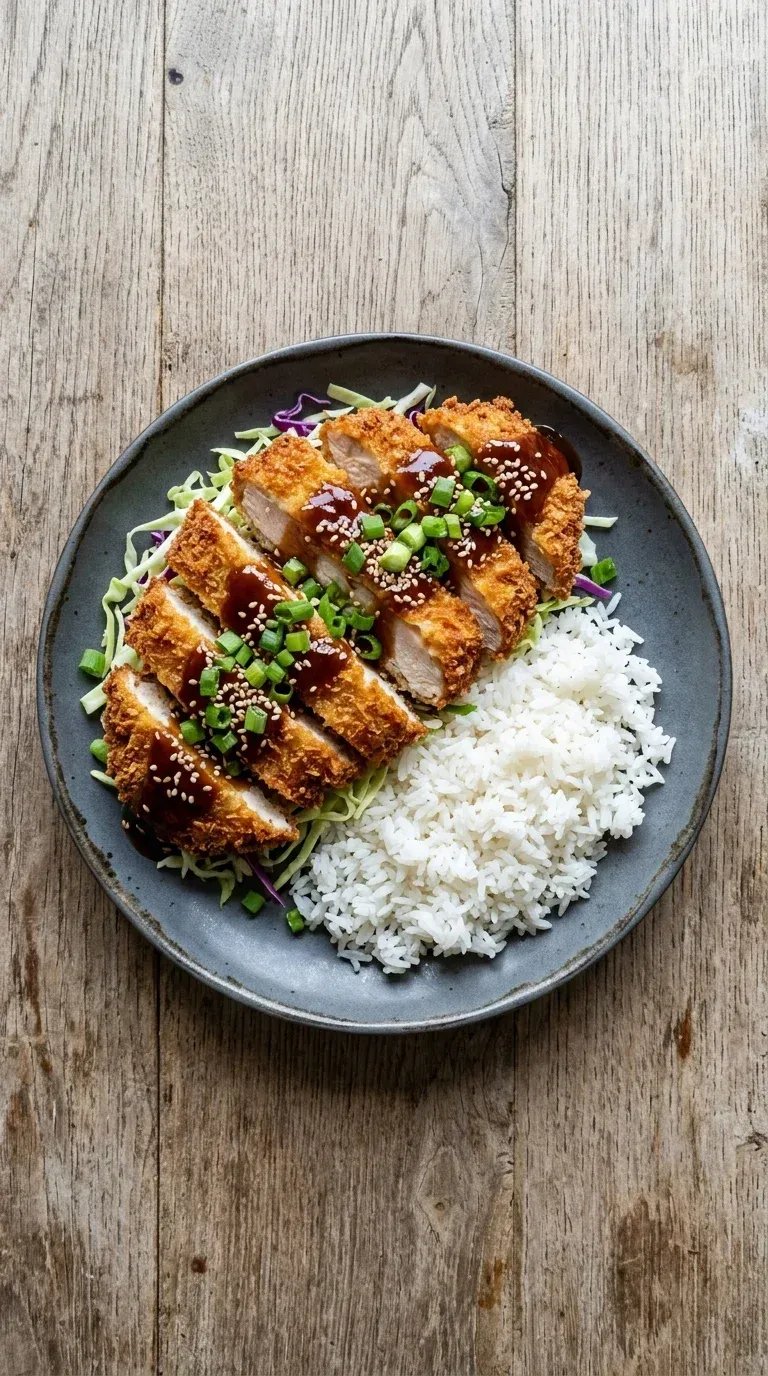
Now for the best part. Serve those strips over a mound of steamed Japanese short-grain rice, drizzle generously with your tonkatsu sauce, and garnish with sliced scallions, shredded cabbage, and a lemon wedge.
- 10
Enjoy it while it's still hot and crispy! Wow, it's just so satisfying.
Nutrition per serving
- 580 kcal
- Calories
- 38 g
- Protein
- 42 g
- Carbs
- 28 g
- Fat
Tips & notes
- Pressing the panko firmly ensures the crust stays put during frying. - Using a deep skillet keeps oil levels low to prevent greasiness. - Steaming rice with a pinch of salt and mirin adds a subtle flavor.
Frequently asked questions
What if my breading is falling off in the pan?
Oops, that happens! Just make sure you're pressing the panko firmly into the meat and that your oil is hot enough before you start frying.
Can I make the tonkatsu sauce ahead of time?
Yeah, you absolutely can. It actually tastes even better after the flavors have had a little time to get to know each other in the fridge.
How do I know when the chicken is perfectly done?
Look for a deep golden brown color, but the surest way is using a thermometer to check for an internal temperature of 165°F.